
An AI-powered finance app for a group running 100+ stores.
Store files go in. A checked P&L, scorecards, rankings and an AI you can question come out. Every month, for every store.
What it changed.
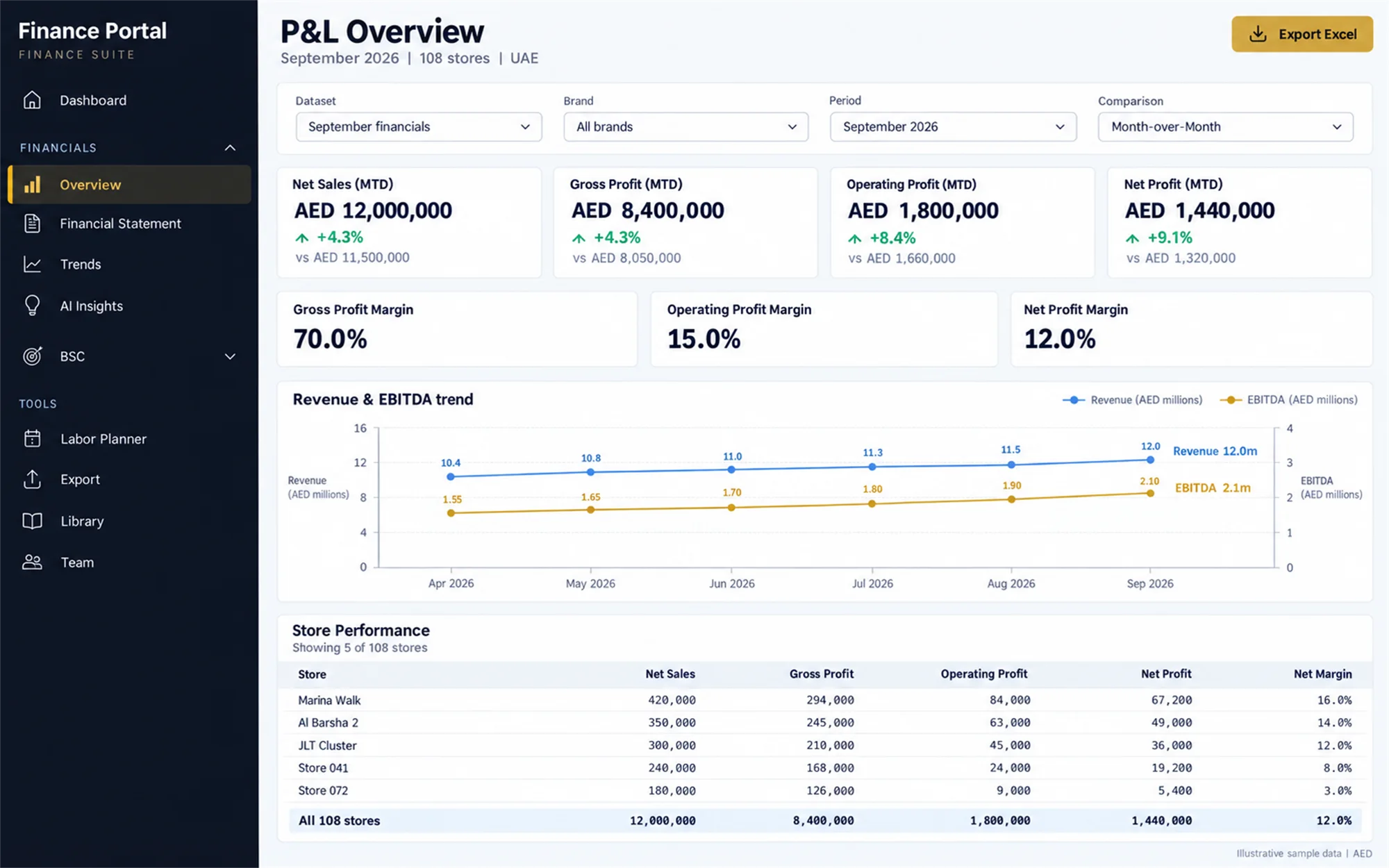
Every store’s P&L and scorecard in one app, across several franchise brands.
Each store total is matched to the file it came from before any report is built. In the first audited quarter, all 303 matched.
Management asks which stores dropped and why, and gets the answer with the numbers behind it.
Reporting for 100+ stores was rebuilt by hand.
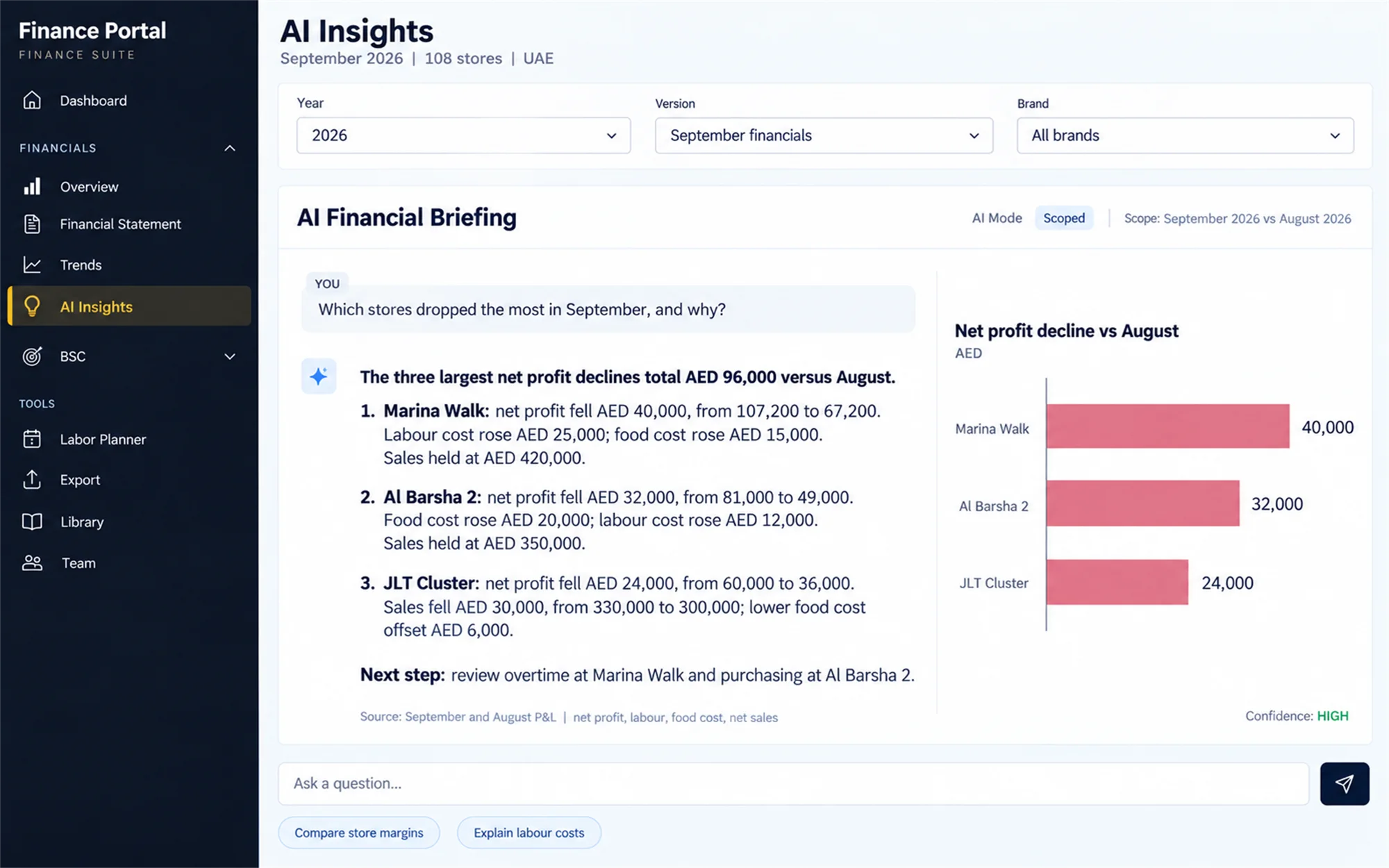
Every month, files arrived from over a hundred stores across several franchise brands. Someone had to work through the values, compare stores and managers, check the totals, build the P&L and scorecard views for each person, and export the reports. Then the next month started and it all happened again.
The reports themselves were fine. The problem was the hours around them, and that by the time a number was ready, nobody had time left to ask why it moved.
So we built one app that does all of it.
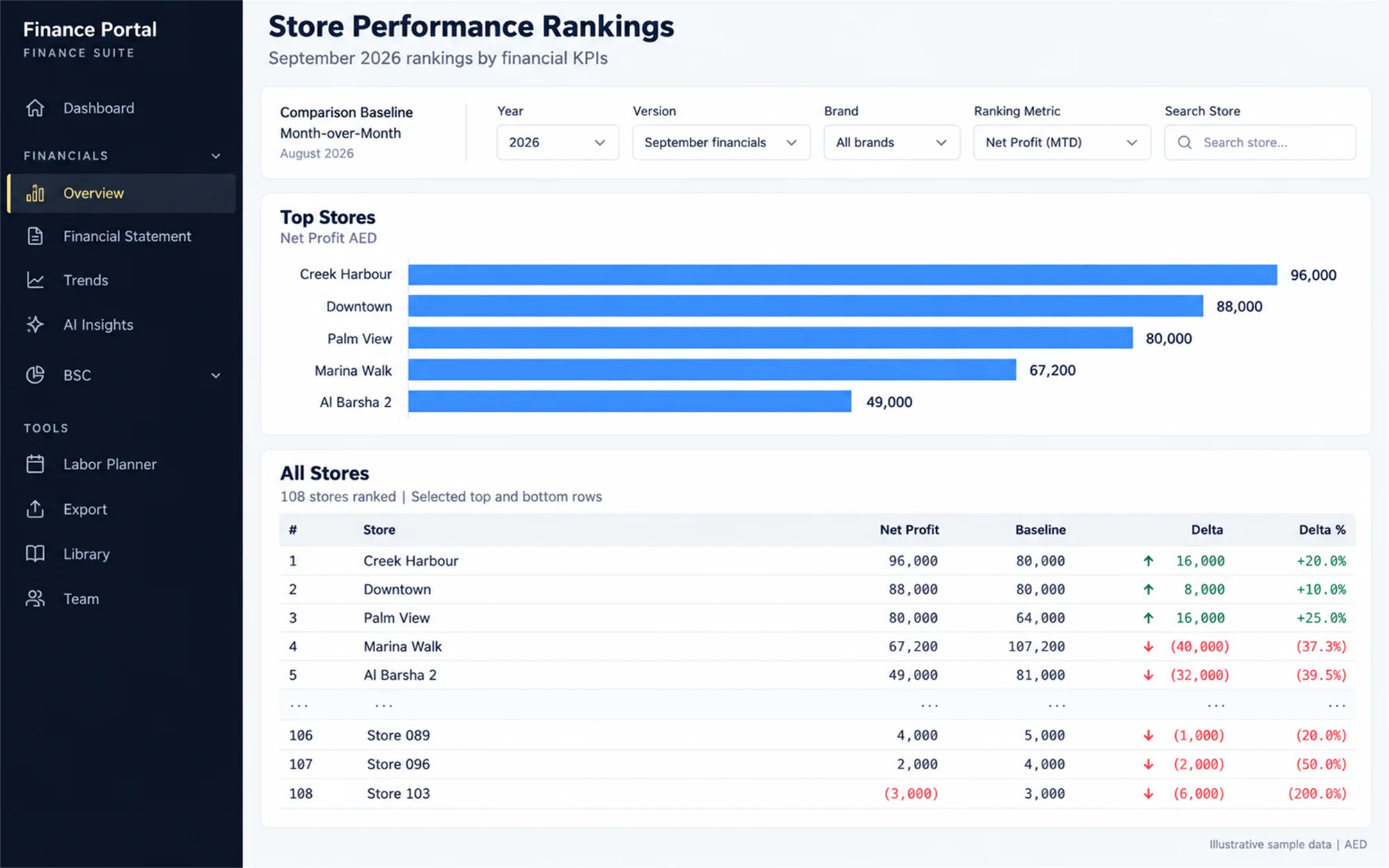
The stores keep sending the same Excel files, so nobody had to learn a new way of working. The moment a file lands, the app reads it, checks every value and puts it into one clean database instead of thousands of loose spreadsheet cells.
From there it builds everything management looks at: the P&L for any store or brand, variance against last month or last year, store rankings, anomalies, Balanced Scorecard audits, manager analytics and labour scenarios. Each person logs in and sees the part of the business they run, and the exports come out the same way every time.
Then we put AI on top of the numbers.
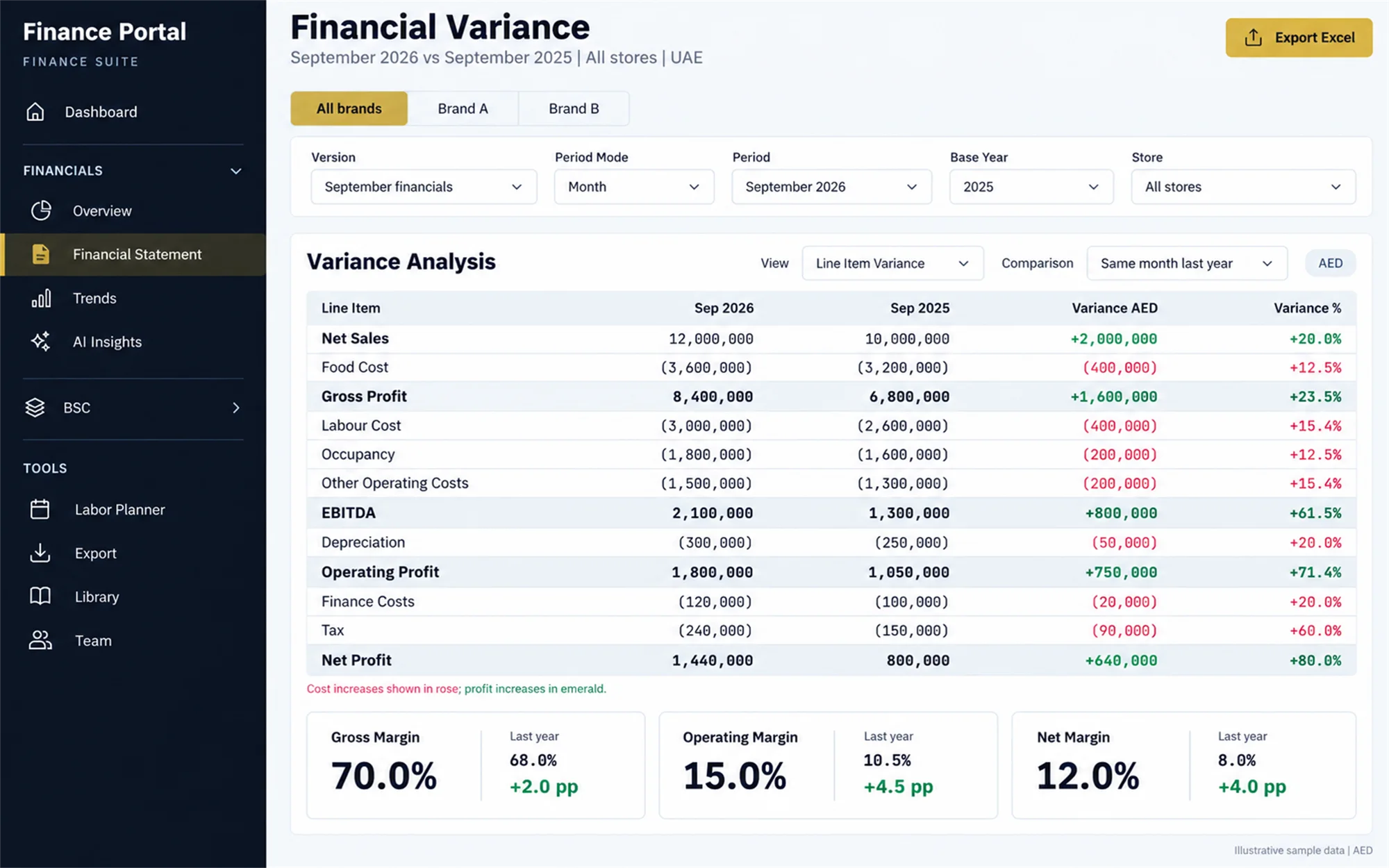
The arithmetic is never the AI’s job. Totals, scores and checks follow fixed rules, so the numbers are always the numbers. The AI does what people actually want next: answer questions. Which stores dropped the most in September? What is pushing food cost up at this branch? Who is at the bottom of the scorecard this quarter, and why?
It answers in plain English with the figures behind it. A manager goes from a question straight to the store to call, instead of building another spreadsheet to find out.
And it proves it never changes a number.
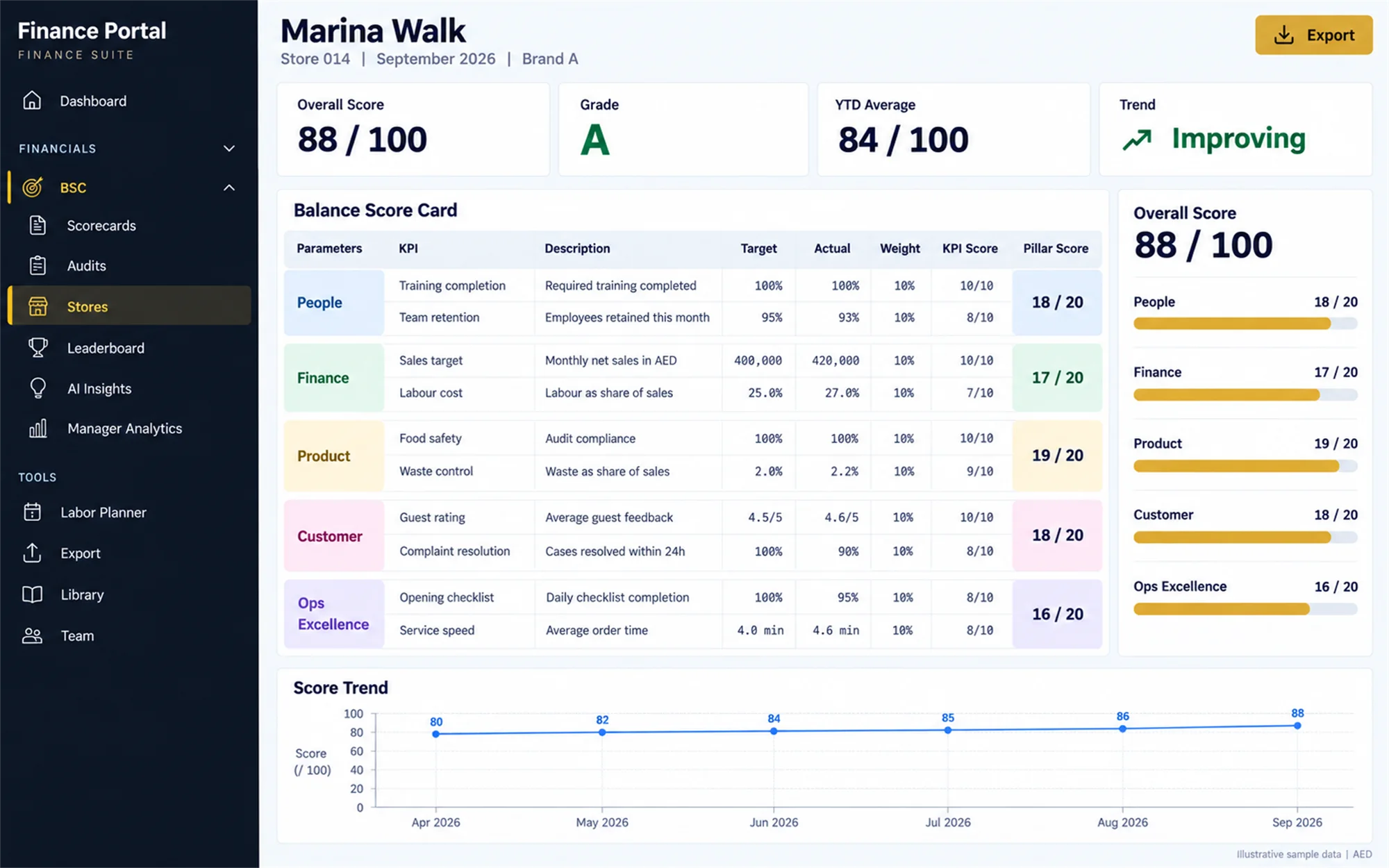
The first thing any finance team asks about a new system is whether it changes the numbers. So every store total is checked against the original file before a single report is built. In the first audited quarter that was 101 stores and 303 monthly totals, and every one matched.
From a store file to an answer
- Store files arrive in Excel
- Every value is read and checked
- Totals matched to the source
- P&L, scorecards and rankings built
- Ask the AI what moved
Built with Next.js and Supabase for the app, the database, logins and file storage, and Google Gemini for the AI, with automated tests on every file format and scoring rule.
Quick answers.
What does the AI finance app do?
It takes the monthly files from 100+ franchise stores, checks every number against its source, and builds the P&L, variance, rankings and Balanced Scorecard reports in one place. Management can then ask an AI assistant plain-English questions like which stores dropped and why.
Does the AI calculate the numbers?
No. Totals, scores and checks follow fixed rules, so the figures are exact. The AI answers questions about the numbers once they are checked.
Still rebuilding the same reports every month?
More work.
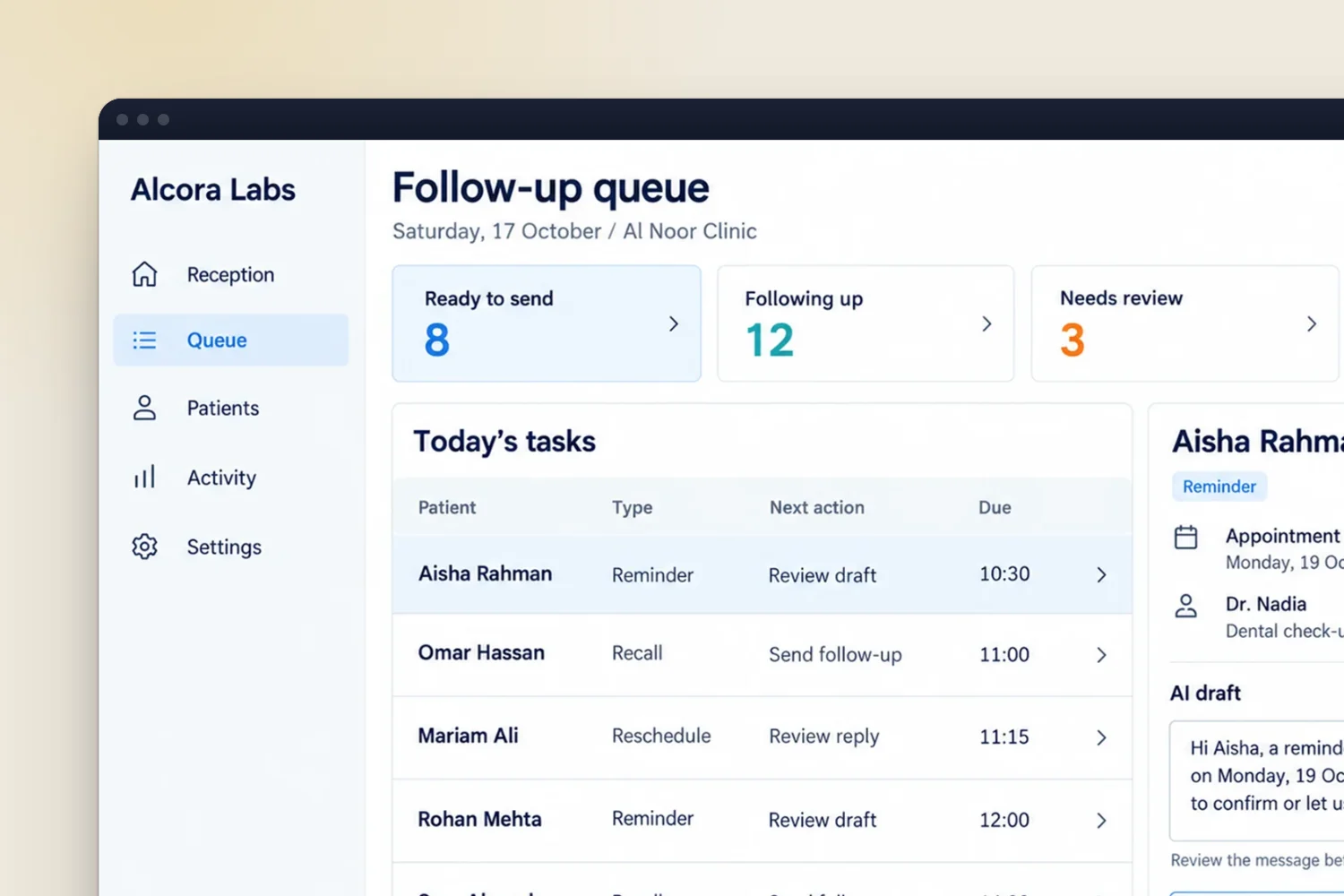
Alcora, a follow-up app for clinic reception
Every missed appointment on one list. AI drafts the WhatsApp, reception sends it.
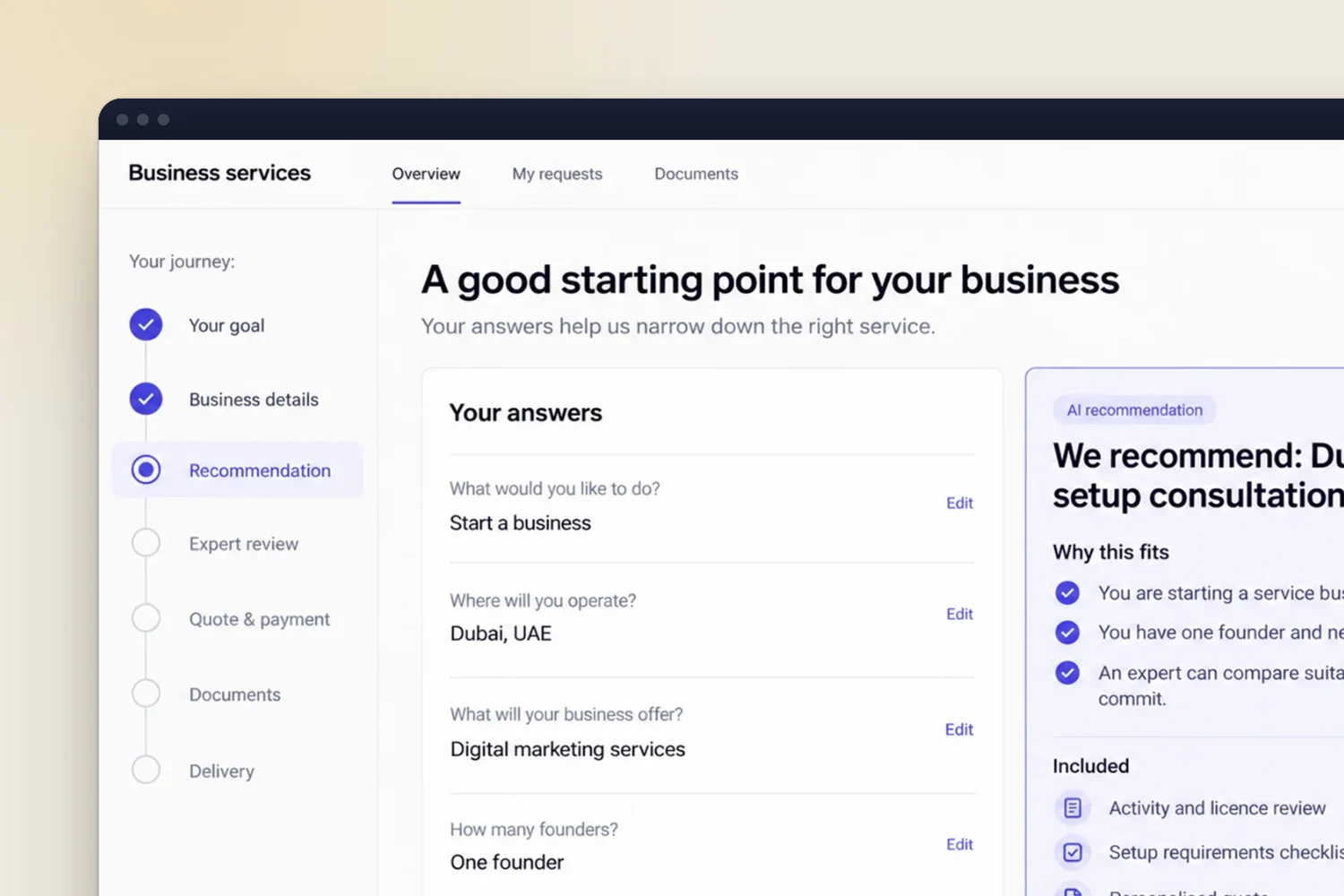
An AI-guided business services platform
We consulted the business and built the MVP: AI matches the service, an expert signs off.
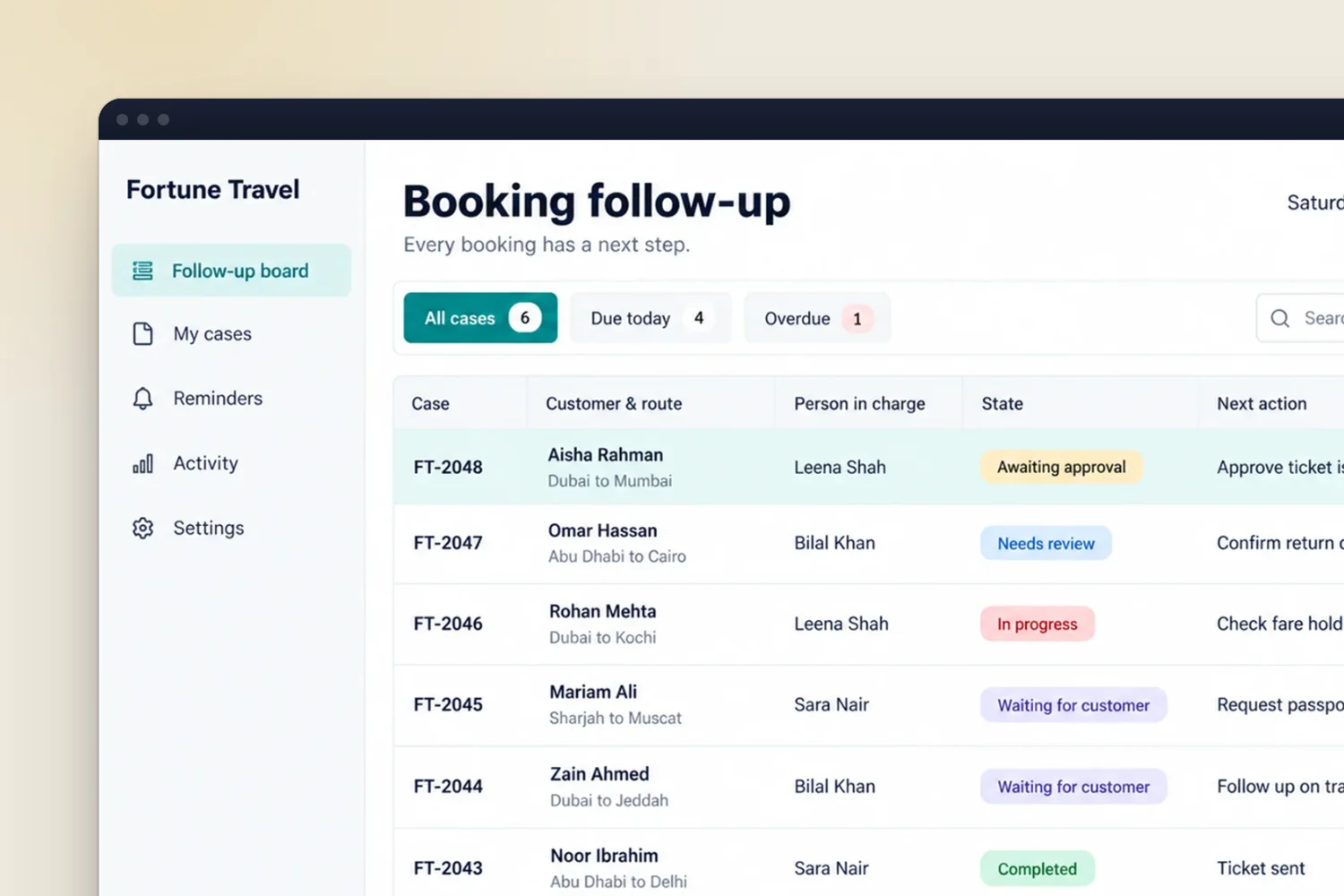
Fortune Travel’s follow-up system
We mapped every booking and designed the system that takes follow-up off the owners.